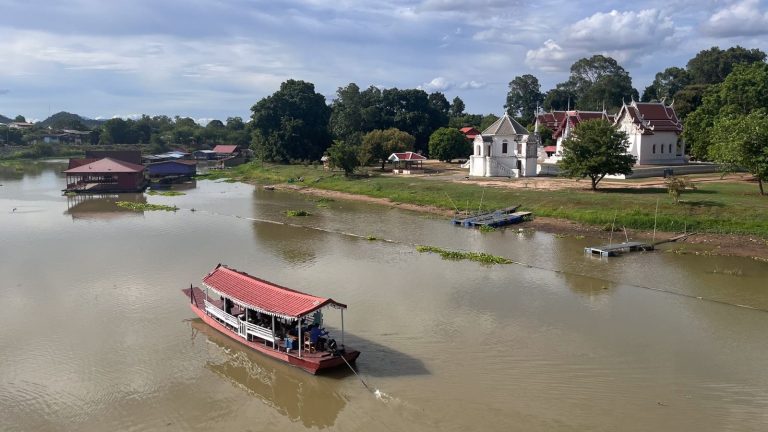
Sitting on the banks of the Mekong River in the northeast province of Loei, Chiang Khan has long been a popular destination for Thai travellers. In Chiang Khan, mornings are unhurried, the air feels lighter, and a sense of tranquillity seems woven into the rhythm of daily life. Visitors come not for glittering malls or luxury hotels, but for what Thai people call the ‘slow life’ and sabai sabai vibes.

With its century-old wooden houses, quaint Walking Street, and attractive natural scenery, Chiang Khan offers more than just a holiday. It offers a chance to reconnect with heritage, with community, and with oneself. But behind this postcard-perfect town lies a fascinating story of adaptation. A story of how a community turned a challenge into an opportunity, reinventing its tourism economy through a creative, sustainable solution.
History and heritage on the Mekong
Chiang Khan’s cultural identity is deeply shaped by its location along the Mekong River and its history of Lao and Thai influences. This blend of traditions is visible everywhere. You can see it in the sticky rice alms-giving ceremonies at dawn, in the intricate local weaving, in the quiet rhythm of fishing boats, and in the timbered architecture of its ancient homes.

(Photo: Thanachet Maviang/Shutterstock.com)
The heart of the town beats strongest along Chiang Khan Walking Street, where 100-year-old wooden houses line the promenade. By day, they stand as living testaments to the town’s past. By night, they transform into a lively bazaar of street food and handicrafts. It’s here that visitors taste local delicacies, purchase handmade souvenirs, and soak in the warmth of a community eager to share its heritage.
Chiang Khan breakfast club
As demand for authentic stays has grown, locals have converted their wooden houses into guest accommodations. Tourists love the charm and nostalgia of sleeping under wooden beams steeped in history. However, many of these wooden houses lack the space, facilities, and resources to serve morning meals. Building dining areas or kitchens would require costly renovations that few families could afford. Without breakfast, a standard expectation in modern hospitality, guesthouses risk losing tourist satisfaction and revenue.
This gap created a ripple effect. Tourists wandered the streets in search of food, sometimes struggling to find early-morning options. Guesthouse owners missed a chance to meet visitor needs while local restaurants, which had already struggled during the COVID pandemic, were left with excess food and dwindling customers. Chiang Khan needed a solution. And it found one, not by copying big-city hotels, but by leaning into the strength of its community.
As so often, the best solutions can be the simplest ones. Accommodation operators introduced a breakfast voucher system, allowing guests to redeem meals at local restaurants. This initiative strengthens community ties, redistributes income, reduces food waste, and enhances the tourist experience by immersing visitors in local food culture. Since its inception, the program has grown widely, benefiting hotels, restaurants, farmers, and markets while preserving Chiang Khan’s charm and ensuring sustainable development.
Green Destinations Top 100
The voucher system is more than a hospitality fix; it has become an engine for sustainable development in Chiang Khan. The town’s success has been recognised by the Green Destinations Top 100 Story Awards. The Awards showcase and celebrate the most inspirational initiatives for sustainable tourism development, and Chiang Khan was runner-up in the Thriving Communities category.
How it works
Instead of investing in kitchens they can’t afford, guesthouse operators partner with local restaurants. When visitors check in, they receive a voucher (typically valued between 60 and 100 Baht) that can be redeemed for breakfast at participating eateries. If a meal costs more, the guest pays the difference. If it costs less, no change is given.
The breakfast voucher arrangement has turned guesthouses into intermediaries, linking tourists to local restaurants while ensuring everyone benefits. Restaurants collect the vouchers and exchange them with the accommodation provider for cash, either daily or on a set schedule.

(Photo: Chaikom / Shutterstock.com)
Tourist benefits
For Thai people, food is a key part of the travel experience, and tourists are delighted to have a wide choice of breakfast options. Whether it’s a steaming bowl of noodles, sticky rice with grilled pork or a tasty cup of hot coffee, they can have it all while seated in the authentic setting of local eateries. Breakfast outings are now cultural exchanges, deepening connections between visitors and the community.

Restaurants have a strong incentive to maintain quality, since guesthouse operators choose only those with good food and reliable service. And with guesthouse owners freed from the pressure of cooking, they can focus on improving lodging quality and tourist services.
Community benefits
The breakfast voucher model has reinforced Chiang Khan’s spirit of cooperation, proving that shared challenges can yield shared success. By distributing income across accommodation providers, restaurants, and suppliers, the model creates a resilient local economy. Guesthouse owners can now confidently say “breakfast included,” boosting satisfaction and bookings. And restaurants, once at risk of closure, have seen a surge of new morning customers. All this helps to share prosperity, preserve the town’s heritage, and create a future where tourism strengthens rather than weakens cultural identity.
Environmental benefits
The voucher system has helped restaurants to reduce waste by adopting a ‘just-in-time’ approach, with food prepared in line with actual demand. Less organic waste has meant lower water consumption and less strain on local disposal systems. The absence of large hotel kitchens has also helped preserve the quiet charm of the town, minimising noise pollution.

(Photo: Em7 / Shutterstock.com)
A model for sustainable tourism
The breakfast voucher system is now widely adopted across Chiang Khan, with more restaurants eager to join. What began as a fix for a practical problem has become a symbol of sustainable community-driven tourism.
For travellers, it means waking up to the smell of freshly brewed Lao-style coffee, walking past ancient wooden houses bathed in morning sunlight, and enjoying breakfast in a riverside eatery bustling with local chatter. Chiang Khan is no longer just a retreat for those seeking peace; it’s a living example of how small towns can thrive by embracing creativity, cooperation, and sustainability.
Visit Chiang Khan
There is no direct train service to Loei, but it’s possible to take the Northeast Line from Bangkok to Udon Thani or Nong Khai and travel by bus (journey time approximately three hours) from there to Chiang Khan.
There is a small airport at Loei (LOE) with daily flights from Bangkok’s Don Mueang Airport (DMK). On arrival, you can transfer by bus for the one-hour journey to Chiang Khan.
Suggested accommodation
(featured in the YouTube video above)